Applications

Use LEAM where thermal control limits industrial extrusion AM.

Large-format additive manufacturing often reaches its limit at the thermal process window: bonding, heat accumulation, dimensional stability, and repeatability.

Applications

Applications with proven production value and focused R&D potential.

Marine, oil and gas, and molds/tooling are closest to current production value. Aerospace end-use parts, rail, and automotive should start from a defined part, material, machine, and target performance requirement.

Maritime large-format additive manufacturing with LEAM thermal control

Marine

Large structures, long tool paths, bonding between layers, retained heat, and geometry stability.

View marine
Large black PAEK seal application example for oil and gas components

Oil & Gas

Large polymer components such as seals, rings, and thick-wall parts in high-temperature materials.

View oil and gas
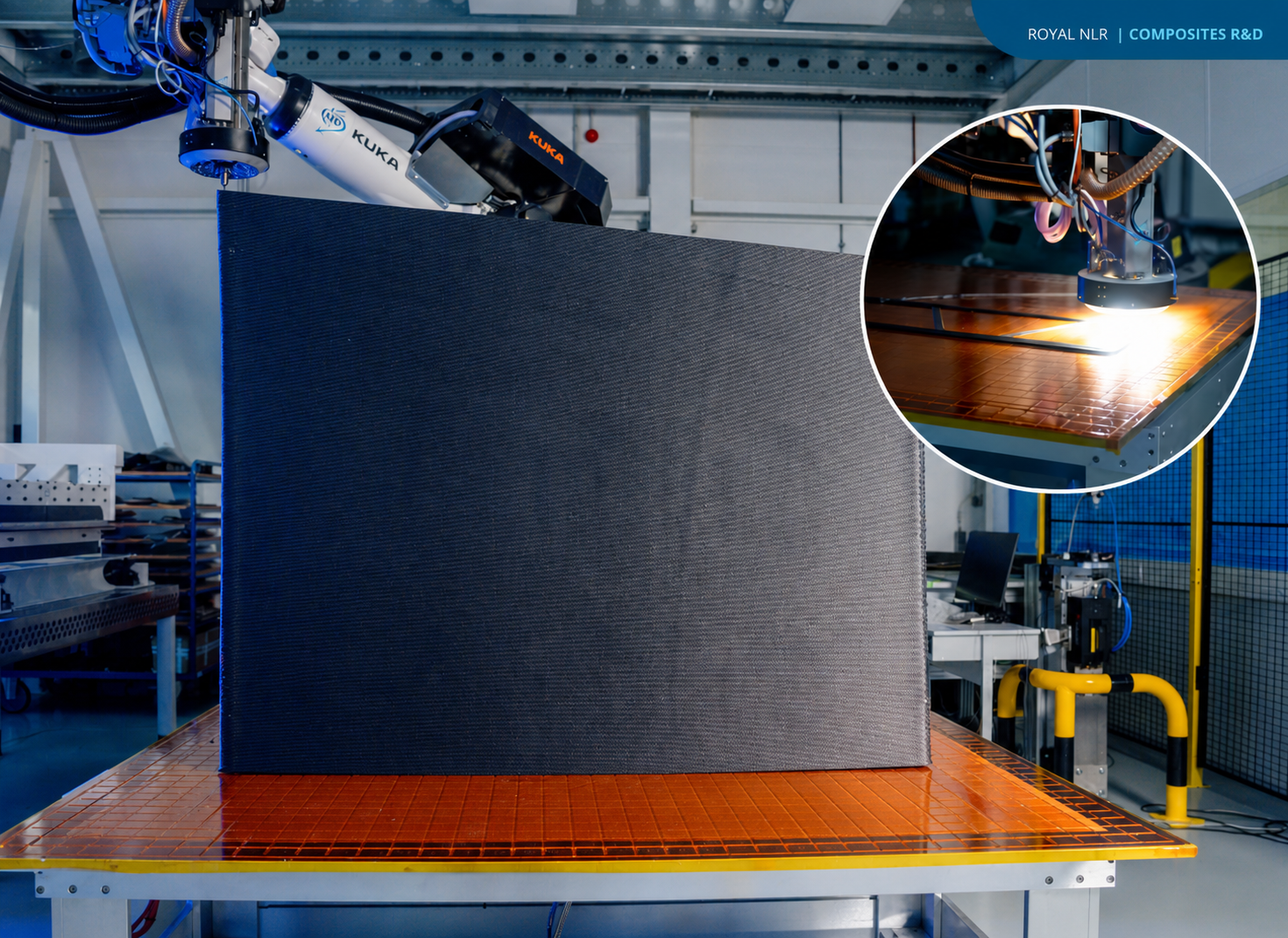
NLR composites research and development environment for large-format tooling work

Molds/Tooling

Large-format molds, plugs, tooling, fixtures, and production aids where layer times become very long.

View tooling

Emerging applications

Aerospace end-use parts, Rail, and Automotive.

Useful paths include composite overprinting, injection-molding-grade materials, inventory reduction, and productivity under changing production conditions.

Aerospace

End-use parts

End-use part development and composite overprinting with process data, repeatability, and controlled thermal history.

Rail

Large polymer parts

Inventory reduction and replacement parts with injection-molding-grade materials and comparable performance targets.

Automotive

Selective production

Repeatability and productivity under changing ambient, cell, or production conditions.

Application-fit checklist

Start with one part, one material, one thermal bottleneck, and one target outcome.

  • Process type, print path geometry, end-effector access, and machine/controller interface.
  • Material category, color, transparency, pigment, fiber content, and absorption constraints.
  • Part size, wall thickness or bead width, print speed, throughput, layer time, and target outcome.
Run fit check