Show us where the part falls short
Is it separating between layers, losing its shape or taking too long to print? A real part tells us much more than a list of machine settings.

The retrofit system / DEMEX
DEMEX brings LEAM thermal control to existing extrusion AM platforms. If weak layer bonds or heat buildup are holding your process back, let’s see how it could help.
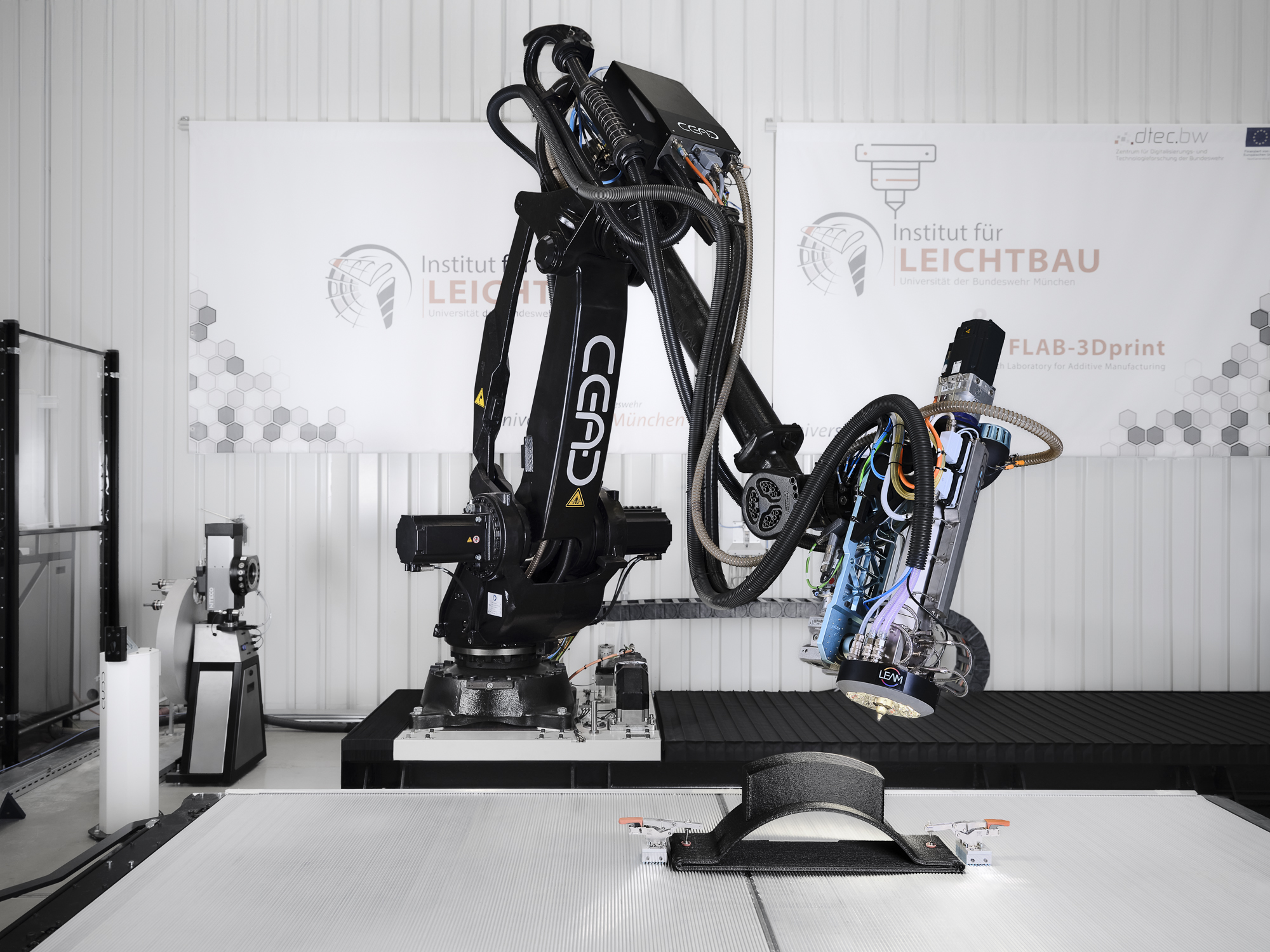
Make more of the machine you have
Is it separating between layers, losing its shape or taking too long to print? A real part tells us much more than a list of machine settings.
We’ll look at your material, the space around the nozzle and how DEMEX would communicate with the machine.
Compare the revised process with the one you use today. Look at the finished part, the time it takes and the work needed after printing.
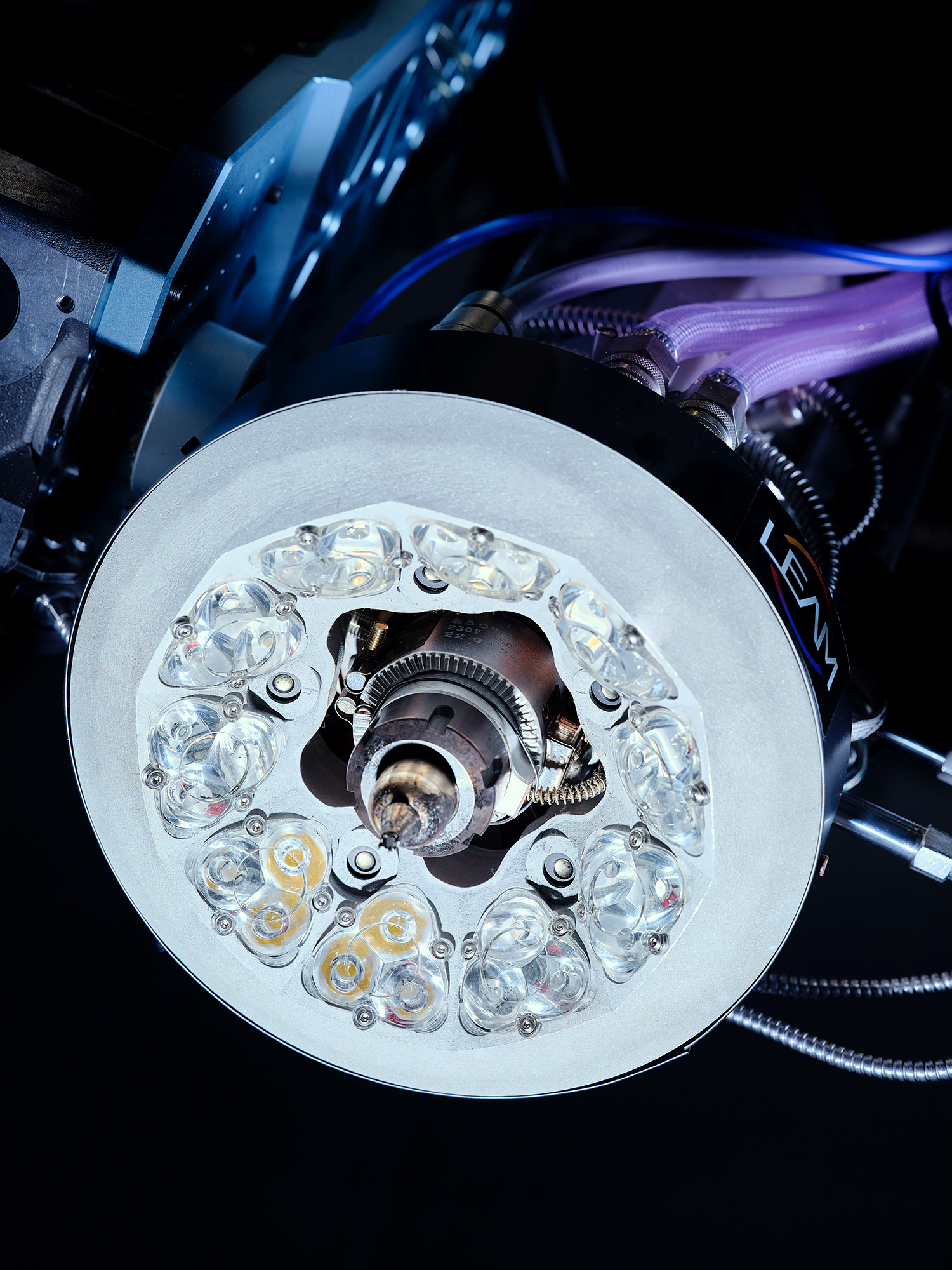
The DEMEX system
DEMEX adds thermal control where the layers meet. Its integration brings together the heating hardware, machine interfaces and operator setup around your extrusion process.
The product package gives you a closer look at the system. We’ll confirm the configuration and installation requirements with you for your particular platform.
Download the DEMEX overview ↗A useful first conversation
Robot or gantry, older machine or latest generation: DEMEX is designed to fit the platform you use. We’ve worked with different OEMs, machine generations and extruders.
If we don’t already have a solution for your setup, we can usually adapt one in a short time. Share the machine and extruder model, along with a photo of the print head, and we’ll work through the fit with you.
From PE to PEEK, we’ve worked with engineering polymers, most high-temperature thermoplastics, and a wide range of fillers and reinforcements. Our experience includes challenging materials that exhibit die swell or sharkskin surface defects.
Tell us the grade, color and reinforcement you use, along with the properties your part needs to keep. We’ll build the evaluation around your material.
Our aim is to make your process easier and your parts better, while working within the workflow your team already knows. So far, we haven’t encountered a combination of extruder, slicer, material and robot that we couldn’t work with.
Tell us how you print today, where the limits are and what you want to improve. We’ll work from that starting point.
A good result starts with clear requirements. That might mean a target strength, a specific material, a minimum throughput or a maximum wall thickness.
Tell us what must be achieved and where you have room to adjust. The more we understand what success looks like for your part, the better we can help you reach it.
Let’s talk about your part
Tell us what you’re printing and where it falls short. We’ll help you decide whether thermal control could make the difference.